Posted on Thu, Jan 26, 2012
Tracy Freeman MD
The liver is one of the most complex and important organs in your body.
It is responsible for:
- filtering toxins from your blood
- storing reserve energy in the form of glycogen
- conjugating and eliminating excess hormones
- producing bile to help the body digest fats
It is essential to keep the liver clean and healthy.
One of the top jobs of the liver to make bile, 1 to 1 1/2 quarts in a day! The liver is full of tubes (biliary tubules) that deliver the bile to one large tube, the common bile duct. The gall bladder is attached to the common bile duct and acts as a storage reservoir. Eating fat or protein triggers the gall bladder to squeeze itself empty after about twenty minutes (or after ingesting the liver cleanse solution) and the stored bile finishes its trip down the common bile duct to the small intestine and eventually to the colon (large intestine).
It is essential to keep this Detoxification pathway clean so that the body can both eliminate toxins and excrete sufficient bile for digestion. Common herbs can help such as milk thistle as well as liver cleanses. Avoiding stressors on the liver such as alcohol, excess fats and exogenous hormones also helps to keep the liver clean. Physician directed liver flushes are also a great asset when looking to improve liver health.
Love your liver and live a healthier life.
Tracy Freeman MD is a holistic medical physician at National Integrated Health Associates, NIHA, an integrative medicine and dental center serving Washington D.C., Maryland and Virginia. Primary care with a holistic approach is for your optimum wellness, not just freedom from disease. Her areas of focus are Holistic Primary Care of adults and children, Autism, and Women's Health.
image via publications.nigms.nih.gov
Posted on Tue, Jan 24, 2012
By Steven Shafarman

Please be aware of your breathing for a moment.
Are you breathing freely, fully, easily? Or does your breathing seem shallow? Is there some strain or difficulty? Do you sometimes notice that you are or were holding your breath?
Shallow or ineffective breathing is a common sign of a stress and a cause of stress. It may therefore be a significant factor in chronic pain of any kind; may increase the frequency of asthma attacks or the severity of COPD; may reduce the functioning of the immune system and digestive system; and may impair the efficacy of medical treatments for Lyme disease, cancer, MS, and other conditions.
We mostly take breathing for granted, except when there’s some difficulty, such as shortness of breath or an asthma attack. Taking it for granted, however, often leaves us without the skills and knowledge to respond effectively when there is some difficulty.
Here are two images for good breathing. And a simple way to improve your breathing:
A common idea is to breathe with or into the belly. The belly or abdomen should expand or protrude while inhaling, and retract while exhaling. Some people call that diaphragmatic breathing, referring to the diaphragm, a dome-shaped muscle that divides the trunk. Those who recommend belly or diaphragmatic breathing often contrast it with breathing in the upper chest, which is presumed to be shallow, inefficient, and associated with stress, anxiety, panic attacks, and depression.
Is that what you’ve been taught? Are you doing that now? Is your belly protruding and retracting?
Another image, mine, comes from observing healthy young children. Recall a time when you watched a young child, perhaps your daughter or grandson. With every breath there’s movement in the front and sides and back. The trunk expands all around and contracts all around. It’s like a balloon inflating and deflating, or a sponge being squeezed and released. You’ve seen that; we all have. And you’ve felt it when carrying a child who’s sleeping.
Breathing, as both images show, happens with changing volume. The trunk expands, and air comes in to fill the space. The volume decreases, and air is squeezed out. The conventional focus is on the chest and belly. My image adds awareness of what’s happening in back, the muscles there and the way the ribs move; that, in my experience, is the key to breathing freely.
Touch your belly, please, and notice what happens as you breathe. Do you feel some movement there? If you’re not sure, breathe a bit more fully, slowly and comfortably. As you do that, also explore and touch different places. Can you detect some movement in your lower ribs? In your sides? In back, where your ribs attach to your spine?
A simple and remarkably effective way to improve your breathing, and a central feature of FlexAware, is to picture your trunk as a sponge. Exhaling is like squeezing a sponge; your ribs act like fingers, moving downward and inward. Inhaling is like releasing a sponge and letting it fill again.
FlexAware exercises use this image to increase the mobility of the ribs and, thus, the volume of the trunk. You can apply this image anywhere, anytime, sitting at your desk or in your car, for example, or walking down the street or lying in bed. Regardless of your age and health condition, you’ll find that the more you practice it, the more effective it is for helping you breathe freely and easily.
Steven Shafarman is a FlexAware teacher and Feldenkrais Method practitioner at NIHA, an integrative medicine and dental center serving the Washington DC area. He is the author of Awareness Heals and the FlexAware Fitness DVD. He is available for free phone consultations at 202-557-8384. More information about FlexAware is at www.FlexAware.com.
Next FlexAware Class: On February 4, 10am – noon, he’ll be teaching a basic FlexAware class, Breathe Freely, Move Easily at National Integrated Health Associates. Register here.
Posted on Tue, Jan 17, 2012
Debra Graugnard
If your answer is yes, you’ve got a lot of company – over 4 million “friends” in the US alone!
In fact, according to the US Department of Health and Human Services, constipation is the
most common gastrointestinal complaint, responsible for over 2.5 million annual doctor visits and over $725 million of spending on laxatives each year.
What is constipation?
The medical definition is having fewer than three bowel movements per week. However, most natural and holistic health practitioners suggest we should have 2-3 bowel movements per day for optimum health. I often hear people say, “I go 2-3 times per week, and that’s ok because that is what is normal for my system.” But think about this: Just because something is normal for your system, does that mean it is what is best for your body?
What is happening in your colon while the waste matter is waiting to be eliminated? By Friday, Tuesday’s burger isn’t so nutritious any more. As it sits, it can become toxic, upsetting the balance of bacteria in the colon and releasing harmful toxins into your bloodstream, affecting other systems of the body as well. Frequent constipation can be responsible for abdominal bloating and pain, fatigue, brain fog, headaches, skin problems, joint pain, and even more serious health conditions.
So why are so many people constipated?
A number of factors contribute to constipation, and often there is a combination of factors at play. The most commonly stated causes are dehydration, lack of fiber, lack of exercise, some medications and “ignoring the urge”.
- The standard recommendation for daily intake of water is half your body weight in ounces, so if you weigh 140 pounds, you need 70 ounces of water each day. Add more for exercise and if you drink diuretic beverages such as coffee, tea or alcohol.
- Eat at least 5 cups of fresh fruits and vegetables per day in a form as close as possible to the way they come from the earth, and limit your intake of processed foods. This ensures a diet high in fiber and natural water content.
- Exercise moderately for at least 30 minutes per day 5 days per week, with at least 2 days of resistance exercise. Exercise increases circulation and diaphragmatic breathing and relieves stress.
- Medications that may cause constipation include pain relievers, anti-depressants, anti-convulsants, iron supplements, some high blood pressure medications, some antacids and more. If you take one of these medications and suffer from constipation, contact your healthcare provider to discuss alternatives.
- When you’ve got to go, by all means go! Have you ever played host to the “I don’t have time for that right now” voice? Not high enough on the priority list? Just like you make time for breakfast or working out, it’s important to make time for your daily movements, especially in the morning. I make sure to give myself 2 hours of awake time before I have to leave the house in the morning.
Another important often overlooked cause that contributes to constipation: STRESS!
- Tune in to your abdomen. Do you sense a free flowing river or New York City rush hour grid lock? Tension held in the abdominal cavity can constrict the natural motility of the digestive organs necessary to move the food along its tract. Awareness is a key first step.
- Are you breathing? Stress can lead to shallow breathing. Practice taking full breaths with the diaphragm moving down into the abdominal cavity as the lungs fill. It’s like giving yourself a massage from the inside out!
- Fight or Flight? Or Rest and Digest? Stress puts us into the Fight or Flight mode, activating the sympathetic nervous system and deactivating the parasympathetic nervous system. Taking time and awareness to sit in a relaxed state with our foods stimulates the Vagus nerve, the main nerve of the parasympathetic nervous system, to innervate the digestive system organs to begin peristaltic movement, secrete digestive juices and open the GI sphincters.
All of these recommendations, including the management and release of stress, can greatly improve your digestion and elimination habits. Sometimes these lifestyle changes can take a while to implement and take effect. Meanwhile, it’s important to remove the toxic buildup that has been accumulating in your system. One popular solution we offer at NIHA is colon hydrotherapy.
How Colon Hydrotherapy Can Help Constipation
Colon hydrotherapy provides a safe alternative to the $725-million common solution of laxatives. Some laxatives can have harmful side effects and with consistent use can lead to dependency and decreased bowel function, especially the harsh stimulant laxatives that stimulate muscle contractions to expel stool.
Colon hydrotherapy, also known as colonics, is a safe, effective method of eliminating waste from the large intestine without the use of drugs. During a session, warm purified water is introduced into the colon, and the waste is softened and loosened, resulting in evacuation through natural peristalsis. Most people claim feeling lighter, mentally clearer and more energetic after just one colonic treatment!
Some people feel uneasy about the thought of colon hydrotherapy, but most people feel so much better after a treatment, they can’t believe they waited so long to try it! If you have questions about the procedure and would like to discuss whether colon hydrotherapy is right for you, please contact Sharon, Debra or Arthur at NIHA for more information.
We have a mantra in the colon hydrotherapy field – better out than in! Don’t let constipation, bloating and gas drag you down. “Unfriend” the 4 million and put the pep back in your step today!
Debra Graugnard is a Certified Colon Hydrotherapist at NIHA integrative medical and dental center in Washington, DC. She is also a Licensed Massage Therapist, holds a Masters of Divinity in Spiritual Healing & Counseling and serves as a Spiritual & Energetic Healing Practitioner. She is passionate about helping people to learn to recognize and care for their bodies, both inside and out, as the sacred vessels of their souls and spirits.
Posted on Fri, Jan 13, 2012
CE Gant MD, PhD
Multiple sclerosis (MS) is an inflammatory, severe, usually progressive, autoimmune, demyelinating, mildly inheritable disease of the central nervous system which many studies suggest is rapidly increasing in prevalence and incidence[1]. The earliest symptoms of MS include psychological distress, fatigue, numbness, impaired vision, loss of balance, weakness and even bladder dysfunction, and they usually begin in early adulthood. With conventional management of MS, these symptoms can wax and wane for up to 30 years, but in roughly 50% of all cases MS steadily progresses to severe disability and premature death killing about 3,000 Americans a year. MS is named for the many scars it produces in the brain and spinal cord as white blood cells (T cells) attack the myelin insulation around neurons. MS afflicts between 250,000 and 350,000 Americans per year.
Drug therapies can slow progression of MS but usually cannot put it into prolonged remission. The multiplicity of probable or proven risk factors - toxic (e.g., heavy metals), infectious (e.g., herpes), psycho-emotional, gastro-intestinal, allergic (e.g., gluten), lifestyle and nutritional - risk factors which undoubtedly worsen MS, and the power of integrative medicine to neutralize such causalities, should offer new hope for MS sufferers. For example, long-term, hyperbaric oxygen therapy alone has been shown to slow or remit the disease[2],[3], and applying hyperbaric oxygen simultaneously with nutritional intravenous therapies (Relox therapy) is likely to accelerate healing of MS even more.
Advances in Functional Medicine and Genomics[4] should excite even more hope for those suffering from MS as well as their families, because now the unique, toxic, infectious, cognitive-emotional, gastro-intestinal, allergic, endocrine, lifestyle and nutritional risk factors in each individual can be sorted out. Through state-of-the-art, laboratory, diagnostic testing, Functional Medicine and Predictive Genomics allows clinicians and patients to co-design a long term recovery plan which focuses on the reversing the specific risk factors in each unique patient with MS. By targeting treatment to specific risk factors, instead of guessing based on statistically possible factors or clinical hunches, a wide array of possible causative risk factors can be honed down to several likely candidates, thus saving money, lessening side effects and increasing efficacy. If you would like more information on an Integrative and Functional Medicine approach to MS, contact us and/or read the Medline-published review by Dr. Parris Kidd[5].
[2] Fischer BH, Marks M, Reich T. Hyperbaric oxygen treatment of multiple sclerosis. New Engl J Med 1983;308:181-186.
[3] Perrins DJD, James PB. Long-term study on hyperbaric oxygenation for multiple sclerosis. Bedford, United Kingdom: Federation of Multiple Sclerosis Therapy Centers; 1996: website www.ms-selfhelp.org.
[5] Parris M. Kidd, PhD (2001) Multiple Sclerosis, An Autoimmune Inflammatory Disease: Prospects for its Integrative Management, Alternative Medicine Review, Volume 6, Number 6
Posted on Mon, Jan 09, 2012
Anita Capizzi RN, CHC
Anita's Healthy Tips
Life certainly doesn’t come with a guide book and we all do the best we can with the tools we have. That being said though, when we see a better way or when we gather more information we are inspired to make changes.

Today I want to share with you 3 common mistakes that could be sabotaging your best efforts at maximizing your health:
- Too much sugar
- Too much white flour
- Not enough “real” food
We all know that sugar isn’t good for us, but out taste buds tell us otherwise! Having something sweet every now and then is very different from consuming sugar on a daily basis. One of the biggest offenders is fruit juice. And the worst part is that many of us are starting out the day with this extreme sugar shock!
When you start the day with sugar, the roller coaster ride begins. Insulin causes a drop in blood sugar which creates more desire for more sugar throughout the day. If you want orange juice in the morning, eat the whole orange!
White flour products (cookies, bagels, crackers, pasta) produce the same insulin highs and lows as sugar. Our bodies strive for balance and when our blood sugar gets too low we look for a quick way to bring it back up which translates in to desire for more cookies, bagels and crackers!
The best way to transform your health from lackluster to blockbuster is to include more “real” food in your diet. Foods from nature like nuts, seeds, fruits and vegetables provide our bodies with superior nutrition and help to stabilize blood sugar, thereby giving us longer lasting energy and decreasing the desire for sweets!
With such easy access to empty calorie junk food in our country, we are filling up, filling out and powering down with chronic disease. Poor diet is a very preventable cause of illness.
Anita Capizzi, RN, CHC, is a Certified Health Coach at National Integrated Health Associates and graduate of the Institute for Integrative Nutrition. Her philosphy is to meet people where they are and upgrade their level of holistic nutrition and wellness.
Posted on Thu, Jan 05, 2012
CE Gant MD, PhD
Most people believe symptoms are the disease so they often take drugs, herbs or supplements to suppress symptoms in the false belief that a medical or psychiatric problem is resolved if symptoms disappear. These myths may stem from deep, unconscious fears handed down to us from ages past when diarrhea was equated with typhoid fever or a cough could mean that one has tuberculosis. TB did kill about one billion human beings in the 1800s, so one can understand why people are afraid of symptoms and believe they are the disease itself. Only recently have we come to understand that symptoms suggest something very different.
Symptoms May Mean your Body is Trying to Heal
Symptoms are actually the result of the body trying to heal itself in some way. Diarrhea and cough could very rarely signify a lethal problem and should be investigated if they become chronic problems, but actually these symptoms are protective detoxification mechanisms which the body employs to remove toxins from gastrointestinal and respiratory tracts respectively. Fatigue can signify malnutrition and therefore tiredness could be a natural response of the body to conserve calories. Nausea is a protective signal from the body instructing us to fast, because the GI tract is dealing with something toxic or infectious and does not want to devote its limited resources to digesting food. Joint pain is a clear protective signal to rest an inflamed joint. Depression could result from overdoing our fight/flight sympathetic nervous system and the consequent burnout protectively forces us to rest.
Symptoms are the result of the body trying to heal itself in some way, but those symptoms can be maladaptive. If diarrhea causes severe dehydration, or if a cough prevents sleep, obviously these symptoms, however valid as healing mechanisms, are maladaptive and may need to be suppressed with herbal or drug therapies. But usually, symptoms are perfectly adaptive attempts of the body to heal, and should be understood from that perspective and modified only if they spill over into a maladaptive pattern. For instance, fever is a protective mechanism designed to injure infectious organisms which do not reproduce as well at higher temperatures. However, brain injury or seizures can occur if fever gets too high, so medication may be needed to keep it under 104 degrees to prevent such adverse maladaptive responses.
Chronic symptoms are usually not lethal, but they can be life-limiting. The three main kinds of chronic symptoms are fatigue, pain (emotional or physical) and dysfunction (occupational, social, academic, interpersonal). I am often asked, “Doc, how should these be treated?” Or, “What can I take to make these symptoms go away?” This is the wrong question, and the age old dictum – if you ask the wrong questions you get the wrong answers – applies here. Many chronic medical and psychiatric problems never resolve because the wrong questions are asked about how to resolve them.
What is Your Body Trying to Tell You?
First of all, if you want to solve a chronic medical or psychiatric problem, and now that you know that all symptoms are an attempt (adaptive or maladaptive) of the body to heal, before rushing off to find a suppressive remedy, take a few moments to contemplate why your body is expressing its healing mechanism by generating the symptoms you are dealing with. The suggestions concerning some common symptoms above could be a helpful starting point. If you have symptoms, why is your body doing this? What is it trying to tell you? There are practical benefits of asking these questions before rushing off to taking a remedy, because symptom suppression with drugs and herbs without understanding the underlying purpose of symptoms, can frustrate the attempts of your body to heal and make the problem worse.
Secondly, diagnostic testing can be helpful to pinpoint the cause of the symptoms. For instance, inflammation and pain could signal your body’s attempt to fight off Lyme or some infection, and diagnostic testing can determine if an infection is present and what the proper treatment should be. Even if an infection were present, remember that even the best antibiotic only shifts the balance of power 10% or so in favor of your immune system, and for chronic infections, the strengthening of your immune system remains the most important option. Preventing inflammation with drugs like prednisone and methotrexate can frustrate your immune systems attempts to kill the causative germ, and allow the infection to spread even as symptoms seem to resolve.
A Step by Step Approach
If molecular therapies (drugs, herbs, supplements) are going to be used to treat chronic medical or psychiatric symptoms, consider the rational strategy I have mapped out below. Generally speaking, the value of any intervention is based on 4 criteria: safety, efficacy, expense and difficulty. In other words; what is the potential harm, how well does it work, how much does it cost, and how much of a hassle is it to use? Based on these 4 criteria, next consider the four main kinds of molecular treatments for chronic medical and psychiatric disorders; 1) nutritional supplements (orthomolecules[1]), 2) bio-identical hormones and neurotransmitters, 3) herbal remedies and 4) drugs. These can be listed as treatments of first resort, treatments of second resort and so on down to treatments of last resort (see table below).
|
Molecular Intervention
|
Treatment Preference
|
Examples
|
Commentary
|
|
Orthomolecules[2], Nutritional Supplements, Molecules which are part of “The Grand Design” (what we are made of)
|
Treatment of 1st Resort
|
Amino acids, fatty acids, minerals, vitamins, oxygen, enzymes, water, sunlight (photons)
|
Deriving these from food may work, but usually replenishment of nutrients requires supplementation.
|
|
Bio-identical Hormones
|
Treatment of 2nd Resort
|
Cortisol, thyroid hormone, melatonin, GABA
|
Made from nutrients, bio-identical hormones are also part of “The Grand Design,” but are often prescribed for faster clinical responses.
|
|
Herbal Phytochemicals
|
Treatment of 3rd Resort
|
Ginkgo, Boswellia, Cinnamon, Garlic
|
Phytochemicals are not orthomolecules, and technically are drugs, but we have had a long evolutionary history with such “natural” chemicals, and we are generally better adapted to them.
|
|
Pharmaceuticals
|
Treatment of 4th (or last) Resort
|
Aspirin, statin drugs, blood pressure lowering drugs
|
Drugs are chemicals which have never been encountered by life, and they can be lethal (3rd leading cause of death in the US behind heart disease and cancer).
|
This strategy can be further refined to take into account detoxification, which usually has a greater effect on healing than mere nutritional restoration for healing of chronic medical and psychiatric disorders. Antibiotics, cancer chemotherapy drugs or chelating agents (binders of heavy metals) are potentially toxic chemicals, but they can result in detoxifying an individual from much more serious toxicities (caused by germs, cancer cells and toxins), and thus their use can be justified. The four treatments of resort should be adjusted to take this detoxification strategy into account, and this produces 6 types of molecular treatments listed below as treatments of first resort down to treatments of last resort.
|
1) Orthomolecules and nutritional supplements > Treatments of 1st Resort
2) Bio-identical hormones >>>>>>>>>>>>>>>>>> Treatments of 2nd Resort
3) Herbal phytochemicals
Herbals which Detoxify >>>>>>>>>> Treatments of 3rd Resort
Herbals which don’t Detoxify >>>>>>> Treatments of 4th Resort
4) Pharmaceuticals
Pharmaceuticals which Detoxify >>>> Treatments of 5th Resort
Pharmaceuticals which don’t Detoxify > Treatments of 6th (last) Resort
|
To be complete, I should close with a reminder that molecular interventions are only one of the 4 main types of modalities in integrative medicine. The other 3 are structural interventions (e.g., chiropractic, massage, surgery), energetic treatments (e.g., acupuncture, surgical lasers) and psychoemotional approaches (e.g., psychotherapy).
Remembering again that symptoms are only an attempt of the body to heal, and that safety, efficacy, expense and difficulty are the factors which justify any treatment, the 6 kinds of molecular treatments listed above, from first to last treatments of resort, can help you organize a rational molecular strategy to intervene in any chronic medical or psychiatric problem.
[1] “Ortho” means to straighten or correct, as in “orthopedist” (corrects the bones) or “orthodontist” (corrects the teeth). An orthomolecular medicine practitioner corrects or straightens out the molecules which are used to construct and run the machinery of the human body.
Posted on Wed, Jan 04, 2012
Anita Capizzi RN, CHC
Anita's Healthy Tips
Happy New Year !! 
So, by now, 4 days in to 2012, you are either going strong with your new year’s resolutions, or you have thrown in the towel, vowing to do better “next time”. My personal experience has taught me never to make resolutions...they don’t work out so well for me!
Try Just One New Healthy Habit
If that’s the case for you why not focus on adding in ONE new habit? Today, I make the case for the addition of one apple a day. And, no, I’m not going to use the old cliché that we all know! I will just say that sliced with freshly ground almond, peanut or sunflower butter gives me the sweetness and the crunch that I love! Plus, it allows me to add in a little extra fiber without thinking too much.
Apples are the Perfect Snack
Apples are complex carbohydrates which provide us with more energy than snacks made from white flour or sugar. Complex carbs low in sugar and high in fiber provide the best source of energy. Granny Smith green apples have the lowest sugar content of all the apple varieties. Medium size apples have about 4 gms. of fiber. Pectin, a soluble fiber found in apples helps with digestion and might help to reduce heart disease. Looking for different foods that may help with osteoporosis? Apples contain boron which helps to increase bone density.
Apples are among the richest food source antioxidants, phytonutrients and of the flavonoid quercitin which helps with inflammatory conditions. Vitamin C and beta-carotene are also found in good quantities in all types of apples.
The Environmental Working Group now ranks apples as #1 in pesticide residue, (see NIHA article, The dirty dozen fruit and vegetable list ) so it makes a lot of sense to buy and serve organic apples, especially when feeding them to children!!
Anita Capizzi, RN, CHC, is a Certified Health Coach at National Integrated Health Associates and graduate of the Institute for Integrative Nutrition. Her philosphy is to meet people where they are and upgrade their level of holistic nutrition and wellness.
Posted on Tue, Dec 27, 2011
Lisa Wilson CHC
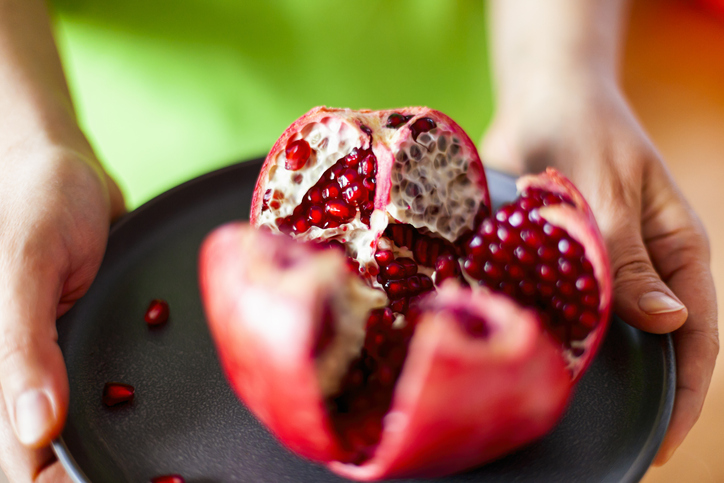
Pomegranates! Ah, that delicious, nutritious, squirty, don’t-wear-white-while-peeling your pom, amazing fruit!

This fruit certainly comes close to that reputation of being a natural pharmacy in a fruit! Pomegranates are delicious too! Just ask my 9 year old. During the season he gobbles up about one a day!
So what do YOU think is so special about this fruit anyway?
As I suspected, pomegranates are great for fertility. Seeds often are!
Pomegranates date back for centuries
They hold a place in history from India, to China, to France and Spain, Africa, and to Greece. The importance of pomegranates were quoted during the Elizabethan times from Romeo and Juliet. The pomegranate holds a special place in Jewish custom as well. Did you know that Tradition holds that a pomegranate has 613 seeds to represent the 613 commandments in the Torah? Pomegranate designs were woven into priest’s robes, and were part of architectural design as well. They are even mentioned six times in The Song of Solomon. So there must be some ancient wisdom in all of this, right? YES, RIGHT!
Let’s talk nutrition:
~Pomegranates are packed with vitamins C, E, K and B.
~Wildly full of powerful antioxidants
~Rich in minerals
~Potassium (even more than a banana!)-Great for alleviating muscle cramping in the body. ~Selenium-Supports the immune system and fights off free radical damage.
~Copper- Helps the body control hormones, and enzyme activity. Also helps support the production of brain neurotransmitters, and supports the immune system.
~Zinc-Coupled with the vitamin C, found here naturally in a pomegranate, zinc can offer tremendous immune enhancing benefits.
Here’s the kicker: These tiny little pomegranate seeds have a reputation for being one of the most powerful foods on the planet!
They have a reputation for: 
-contributing to strong, and beautiful teeth
-being a healthy heart snack
-useful for those with Alzheimer’s disease
-assisting one lower blood pressure, and cholesterol levels
-having anti-cancer properties, for prevention
-may help with hormonal issues like hot flashes, and bone loss
So enjoy the season, and eat up those pomegranates!
Last chance to get our 25% off ONE YEAR ANNIVERSARY SALE!
Register today for the January Raw Food Institute. Call 202-543-HEAL
New: 0% interest for 6 months NEW: GIFT CERTIFICATES NOW AVAILABLE FOR SOMEONE YOU LOVE! Start 2012 off right!
Come for a week of detoxification and cleansing, January 15-21. We’re getting RAVE REVIEWS!
Posted on Thu, Dec 22, 2011
Lisa Wilson CHC
This pomegranate recipe is a beautiful red and green display on your holiday table and wildly full of antioxidants, minerals and vitamins!
Check out my crazy delicious , all time favorite fennel and pomegranate salad!
Pomegranate and Fennel Salad 
- 4-5 fennel
- 3 red onion
- 5-6 oranges
- 3 pomegratates
- (chop the above)
- lightly toss in:
- olive oil
- sea salt
- black pepper
Serve to your group and enjoy! (psst!! It is seriously that easy!)
To get more great healthy recipes like this please sign up for
The Raw Food Institute newsletter! Visit:
We post a ton of great RAW FOOD information, with how to videos and recipes too! Visit Raw Food TV(see tab on site) for excellent how-to videos!
Posted on Sat, Dec 17, 2011
Lisa Wilson CHC
Not sure where to start?
YOU CAN FEEL BETTER NOW!
(and great kitchen tools will take you a long way!)
Before jumping into those raw recipe books, there is some equipment that will make your life so much easier!
Let’s face it, most of us did not grow up eating a whole lot of raw foods. I know I didn’t ! My parents owned Dairy Queens! I grew up behind the counter slurping up mud slides (a mix of all sodas), blizzards and chomping on a greasy burger and fries. NO WONDER I HAD CYSTIC ACNE AND WAS OVER WEIGHT IN MY PRIME COLLEGE YEARS! Looking back, those years I spent hiding those purple(cystic) lumps behind my hair were such a waste! Simply switching up my diet could have prevented all of that embarrassment I felt as a young woman!
Meaningful change takes time
It is not necessary to invest in this equipment to get more raw into your life(a knife and a cutting board can get you started). However, once you have this equipment, you will wonder how you ever lived without it! Even my kids use this equipment for smoothies, juices, popsicles and so on.
Check out my video for my top kitchen picks for setting up your raw food kitchen!!
 |
| Raw Food Equipment |
These tools will make your journey to a healthy lifestyle so much easier!
Investing in your health is the best investment you could ever make in yourself!!
For more information about our upcoming
January Raw Food Institute, please visit:
The Raw Food Institute
Call: 202-643- HEAL (4325) to register today!
Here’s to a Happy and Healthy New Year!!!